
Korea Institute of Aviation Safety Technology Hosts the 1st “KIAST Future Aviation Mobility Forum”
Industry Leaders Share Core Drone Component Technologies and Production Capabilities — Discussing Localization Needs and Collaboration Strategies
By Jae-han Kim | Published September 5, 2025, 17:42
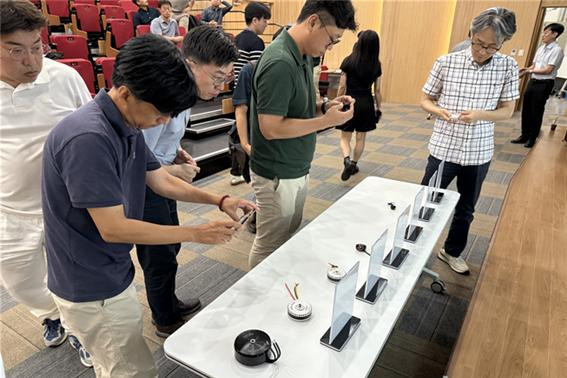
KIAST Successfully Hosts the 1st “Future Aviation Mobility Forum” — Spotlight on Drone Component Technologies and Localization Strategy
By Jae-han Kim, Aviation & Defense Correspondent, eNewsToday
The Korea Institute of Aviation Safety Technology (KIAST) announced on the 5th that it successfully hosted the 1st “KIAST Future Aviation Mobility Forum” at the National Aviation Museum auditorium on August 26 and September 2.
The forum was organized to assess the current state of core drone component technologies—a key determinant of competitiveness in the drone industry—and to discuss strategies for localization and industrial collaboration. Attendees included representatives from the Ministry of National Defense, local governments, and major companies across the drone industry. Leading domestic companies in motors, batteries, and communications equipment participated as presenters, sharing current technological capabilities and future prospects.
On the first day, three motor companies — Starman, KRM, and Namyang Nexmo — and component manufacturer Vololand introduced high-output, high-efficiency motor technology, production capacity, and key component advancements in FC (Flight Controller), ESC (Electronic Speed Controller), and GPS. Presentations also covered export performance, localization needs, and global industrial connectivity, followed by an in-depth discussion on the future potential of drone motors.
The second day focused on battery and communications technology, with presentations from BII and LG Energy Solution in the battery sector and Smarti in communications. Topics included battery cell cost and manufacturing processes, standardization requirements, and solutions for communication reliability, identifying essential elements for the stable growth of the drone industry.
Participants closely reviewed component applicability and supply conditions, while also actively discussing collaborative approaches such as standardization and joint development. Strong consensus emerged on the necessity of localizing core drone components such as motors and batteries, and several cooperation models were proposed to advance this goal.
The forum earned positive reviews as a practical venue for strengthening the overall drone industrial ecosystem and securing a stable supply chain, beyond simply showcasing technology. Presenters also shared production capabilities, overseas expansion performance, and market outlook, highlighting the strong potential of Korean-made drone components to achieve global competitiveness.
Importantly, the forum served as a starting point for industry–academia–research–government collaboration aimed at technical exchange and localization of core drone parts. It is expected to contribute to both supply chain stability and strategic preparation for overseas market entry.
KIAST President Ho-won Hwang stated, “This forum provided an important opportunity to share the current landscape of Korea’s drone component industry and explore the path toward localization and cooperation. KIAST will continue to work closely with the government, corporations, and research institutions to strengthen Korea’s technological competitiveness in the drone sector, build a stable domestic ecosystem, and support global market expansion.”
Source: eNewsToday